Bose Headphones 700 Review
Bose's over-ear noise cancelling headphones, launched in 2019 and discontinued by Bose in October 2024 in favor of the QuietComfort Ultra. This listing is priced at $149.95, well under the original $379-399 launch MSRP and roughly in line with what refurbished units have sold for in 2026.
Marcus Bell's review
By Marcus Bell ·
Category scores
- Comfort 3
Ears run hot after a couple of hours per independent testing, pads are stiffer than Bose's older QC35 II, and a number of owners report clamping pressure that worsens over long sessions. Try before committing to all-day wear.
- Value 3.5
$149.95 is a fair price against realistic 2026 resale value (roughly $100-220 used/refurbished per Swappa and Reebelo), not the original $379-399 MSRP. Reasonable if you know you're buying discontinued stock; a worse deal if you were expecting a supported current product.
- Noise cancellation 4
Measured at ~95% noise reduction six years post-launch, on par with the current QC Ultra. Sony's WH-1000XM5 still out-cancels it in the low end by up to 15dB in the 50-200Hz range, so it's not the top pick if engine and HVAC drone are your problem.
- Battery life 3
20-21 hours measured, the weakest figure in its class against Sony's 30-38 hours, with some owners reporting further drop-off after months of use. Not the choice for multi-day travel without a charger.
- Sound quality 4
Vocals and treble follow SoundGuys' preference curve closely, and the midrange stays clear without being buried by the low end; SoundGuys rates it as sounding better than Bose's own QC35 II. Sony's XM5 pushes roughly 5dB more bass emphasis below 300Hz per SoundGuys' frequency response measurements, so the 700 reads as the flatter, more neutral of the two rather than the punchier one.
- Build quality 4
Unibody metal headband and leather cushions, with owners six years in reporting no visible wear. IPX4 splash resistance only, not rated for anything more than incidental water exposure.
The review
Bose stopped making the 700 in October 2024 and replaced it with the QuietComfort Ultra. Whatever's being sold here at $149.95 is old stock, not a supported current product, and that price only makes sense against what these have actually traded for used and refurbished, roughly $100 for a used pair on the resale market per Swappa's average sale price, up to $219 for a professionally refurbished unit per Reebelo, not against the $379-399 sticker it launched at. Buy it as a discontinued pair of ANC headphones at a real discount. Don't buy it expecting Bose's current flagship experience.
The noise cancelling still holds up. SoundGuys measured the 700 pulling low frequencies down to one-sixth of their original loudness, and a Tom's Guide retest six years after launch still put noise reduction around 95%, on par with the current QC Ultra. Sony's WH-1000XM5 beats it in the low end though, by up to 15dB in the 50-200Hz band per SoundGuys' measurements, which is the range that matters most for engine drone and HVAC hum. If low-frequency cancellation is your priority, the XM5 wins that fight.
Where the 700 is genuinely best in class is calls. Forbes, CNET, and Wired independently rank it above its Sony rivals for voice pickup, and there's a spec behind it: eight microphones total, six of them handling ANC, and of the four assigned to voice pickup, two overlap with that ANC array while two are dedicated purely to isolating your voice from wind and background noise. If you're on calls outdoors regularly, this headphone handles it better than almost anything else in the category, discontinued or not. The touch controls on the earcups, unusual at launch, still hold up better than Sony's swipe gestures on the XM5 years later.
Comfort is the real weak spot, and it's not in the bullet points. SoundGuys reported ears running hot and sweaty after a couple of hours, with pads noticeably stiffer than Bose's older QC35 II. Separately, a number of one-star Amazon reviews call out clamping pressure at the top of the head that gets worse the longer a session runs. If you sit in headphones for four-hour blocks, try these before you commit.
Battery is 20 to 21 hours measured, which was mediocre at launch and is the weakest number in its class now against Sony's 30-38 hours. Some owners report it degrading further after months of regular charging, consistent with normal lithium cell wear rather than anything Bose-specific, but it's one more reason this isn't the travel pick.
Two things the listing leaves out. The earcups don't fold flat, so the hardshell case isn't optional for travel, it's required, and it adds real bulk. And Bluetooth reliability draws consistent complaints: dropped connections that need a full charge cycle to clear, two-device multipoint pairing that doesn't reliably hold, and a companion app criticized for forced repeated sign-ins and slow or failed Bluetooth handshakes. Some owners report firmware updates introducing new problems, skipping, distortion, ANC cutting out, rather than fixing existing ones.
Build quality has no real complaints attached to it: unibody metal headband, leather cushions, and owners six years in report no visible wear. It's IPX4 splash resistant only, not built for a run in the rain.
At $149.95, this is a fair price for excellent ANC and the best call quality in its category, from a company no longer supporting it as a current product. Buy it if calls matter more to you than all-day comfort and you're fine with a case-required travel setup. Skip it if you want long comfortable sessions, the strongest low-frequency ANC available, or a headphone still getting active firmware support, the QC Ultra or Sony's XM5 cover those better, at a higher price.
The verdict
What works
- Noise cancelling remains excellent six years after launch, measured around 95% reduction, on par with Bose's current QC Ultra.
- Call quality is best-in-class per Forbes, CNET, and Wired, backed by an 8-microphone array with two mics dedicated purely to isolating the wearer's voice from wind and background noise.
- Build holds up well over time: a unibody metal headband and leather cushions that owners years into ownership report show no visible wear.
- At $149.95 against a realistic used/refurbished market of roughly $100-220, it's a discount into flagship-level ANC and calling rather than a markdown on a current product.
What doesn't
- Comfort breaks down on long sessions: ears run hot within a couple of hours per independent testing, and clamping pressure worsens the longer a session runs per owner reports.
- Battery life is the weakest in its class at 20-21 hours measured, well behind Sony's WH-1000XM5 at 30-38 hours.
- Bluetooth reliability draws consistent complaints, including dropped connections that need a full charge cycle to clear and multipoint pairing that doesn't reliably hold.
- Buy it if
- Buyers who spend a lot of time on calls, especially outdoors or in wind, and who are knowingly buying discontinued stock at a discount and don't mind a case-required travel setup.
- Skip it if
- Buyers who need all-day comfort, the strongest available low-frequency ANC, or a headphone still receiving Bose's active firmware support should look at the QC Ultra or Sony's WH-1000XM5 instead.
Frequently asked questions
Is the Bose 700 still an active Bose product?
No. Bose discontinued it in October 2024 and replaced it with the QuietComfort Ultra. This listing is remaining stock, sold at roughly refurbished-market pricing rather than original MSRP.
How does it compare to Sony's WH-1000XM5?
The 700 wins on call quality by a clear margin, thanks to its 8-mic array. Sony wins on low-frequency noise cancelling (up to 15dB better in the 50-200Hz range) and battery life (30-38 hours versus 20-21).
Do the earcups fold for travel?
No. There's no folding hinge, so the included hardshell case is required for travel, not optional, and it adds noticeable bulk to a bag.
How long does the battery actually last, and does it hold up over time?
Measured battery life is 20-21 hours, already the weakest in its class at launch. Some owners report further degradation after months of regular charging, which is typical lithium battery wear rather than a defect specific to this unit.
Ready to buy the Bose Headphones 700?
Check price at Amazon →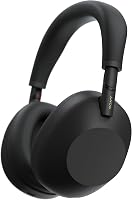



Comments
No comments yet — be the first to share your experience with the Bose Headphones 700.