Sennheiser HD 650 Review
A 300-ohm, open-back dynamic headphone with replaceable cables and cushioning, intended for critical listening in quiet spaces. It weighs 260 g and includes a 3 m dual-entry cable.
Marcus Bell's review
By Marcus Bell ·
Category scores
- Battery life 0
This is a fully wired headphone with no battery, charging system, or wireless operation.
- Value 3
The tuning, longevity, and serviceability remain persuasive, but Sennheiser’s checked price of $379.95 for a new unit makes value heavily dependent on discounts. The acoustically equivalent HD 6XX is the better purchase whenever it is available new for materially less under acceptable warranty and seller terms.
- Noise cancellation 0
There is no active noise cancellation. The open cups also provide virtually no passive isolation and leak heavily into the room.
- Comfort 3.5
The 260 g weight suits long sessions, but new units can feel uncomfortably tight, especially on some larger heads or with glasses. Worn pads may eventually place the ears against the inner foam.
- Build quality 4
Replaceable wear parts and owner reports spanning more than a decade inspire confidence. Pads require recurring maintenance, paint can wear, and the proprietary 3 m cable is cumbersome.
- Sound quality 4.5
Natural vocals, even mids, restrained treble, and very low measured higher-order distortion make it a dependable reference. Sub-bass rolls off below roughly 50 Hz, and the intimate stage can congest dense arrangements.
The review
The HD 650 remains a credible $379.95 reference headphone when bought new from Sennheiser’s US store, but it is not automatically the sensible buy. Its strengths are proven warm-neutral tuning, low listening fatigue, and a repairable design with a long ownership record. Its liabilities are equally established: bass rolls off below roughly 50 Hz, the presentation is unusually intimate for an open-back headphone, and the pads are both a consumable part and part of the acoustic system.
Measurements broadly support the reputation. Response is comparatively smooth through the midrange, but the measured bass and treble show frequency-dependent variation rather than remaining even across the full range. Published testing also found very low higher-order distortion from 200 Hz to 10 kHz. Vocals and acoustic instruments are the reason to own it. They sound natural without the treble emphasis that can make ostensibly more detailed headphones tiring over a long session.
The listing's less than 0.05 percent THD figure needs context. Sennheiser specifies it at 1 kHz and 1 V, not across the audible range. A DIY-Audio-Heaven test measured roughly 2 percent second-harmonic distortion around 50 Hz, although that test's portable rig has documented low-frequency artifacts and a relatively high second-harmonic floor. The number is useful context, not a universal result for every HD 650. Sennheiser specifications DIY-Audio-Heaven measurements
Sub-bass still lacks the extension and physical weight available from the HiFiMan Sundara. RTINGS measured somewhat stronger low bass and a substantially more spacious passive presentation from the Sundara, while the HD 650 produced the more accurate midrange in the same comparison. Dense orchestral and soundtrack material can expose the Sennheiser's narrow staging and become congested. The trade is straightforward: the Sundara supplies a bit more low bass and more space, while the HD 650 has the longer-established service and durability record. RTINGS comparison
Its 300-ohm impedance sounds alarming but is routinely misunderstood. This headphone needs voltage, not a large amount of current. Sennheiser specifies 103 dB SPL at 1 V, and a capable 2 V dongle or audio interface is generally sufficient. Weak phone outputs may reach ordinary listening volume but run short of headroom with quiet masters, dynamic peaks, or EQ pre-cuts.
Comfort changes over the ownership cycle. The 260 g weight is modest, but new units can feel uncomfortably tight, particularly on some larger heads or when worn with glasses. Owners report the clamp easing as the pads conform or after deliberate stretching, sometimes within a couple of weeks. Later, flattened pads move the drivers closer and can allow the ears to contact the inner foam. Owner clamp reports
Pad wear also changes the sound. A DIY-Audio-Heaven comparison of particular old and new pads found about 2 dB more output below 1 kHz from the old pair. Under a 10 N load, those old pads compressed by 40 percent, compared with 20 percent for the new pair. The tester did not know how stiff the old pads had been when new, so this is evidence from those samples, not a controlled aging curve. It still matches the ownership pattern: an older HD 650 often becomes warmer and darker rather than merely less comfortable.
Replacement timing depends heavily on use. Regular owners report intervals around one to two years, while lighter-use examples can last considerably longer. Genuine pads cost $54.95 from Sennheiser when checked on August 30, 2026, and third-party pads can alter the intended response. Owner pad reports Sennheiser replacement pads
Long-term serviceability is better than average. Owners report many years of use with pad, headband-cushion, and cable replacements, including an eleven-year review that specifically credits the build quality. Paint can wear at the headband edges and cables eventually fail, but both the cable and cushioning are replaceable. The 3 m cable is awkward on a desk, however, and its cup ends use Sennheiser’s proprietary two-pin HD 600-series connectors rather than standard 3.5 mm plugs, so a replacement must be made specifically for compatible Sennheiser models. Sennheiser listed a compatible 3 m replacement cable at $24.90 when checked on August 30, 2026. Long-term owner review Sennheiser replacement cable
This is principally a quiet-room headphone. Its open construction provides virtually no isolation and leaks sound, making it poorly suited to commuting or shared offices. It may also disturb someone in a shared bedroom or bleed into a live microphone, depending on listening level, distance, microphone pattern, and room conditions. There is no battery or wireless mode, which is appropriate for the design but makes the standardized battery and noise-cancellation scores necessarily poor.
At $379.95 new from Sennheiser’s US store when checked on August 30, 2026, this is a price-sensitive recommendation. Before buying, check the HD 6XX. Head-Fi measured the two models and found matching frequency-response and distortion behavior, concluding that they sound the same; Stereophile likewise described its measurements as essentially identical within measurement error. That acoustic equivalence does not mean every physical detail is identical, since the finish and included cable differ. A materially cheaper HD 6XX is the rational purchase, subject to its current availability, warranty, and seller terms. Sennheiser HD 650 listing Head-Fi HD 6XX comparison Stereophile measurements
Choose the HD 650 when its price is competitive and you want a smooth, maintainable reference for vocals, acoustic music, mixing checks, or long quiet-room sessions. Skip it if you need isolation, deep sub-bass, expansive staging, a short desk cable, or ample headroom from a weak source.
The verdict
What works
- Owners consistently praise the natural treatment of vocals and acoustic instruments during long listening sessions.
- Owners value the smooth tuning for avoiding the treble fatigue associated with brighter alternatives.
- The 260 g weight is lighter than many planar competitors at this price.
- Replaceable cables and cushioning help owners keep the headphones in service for more than a decade.
- A capable 2 V dongle or audio interface is generally sufficient, so a large desktop amplifier is not mandatory.
What doesn't
- Owners report that new-unit clamp can feel uncomfortably tight until it eases.
- The pads flatten with use, changing the tuning and often requiring replacement after roughly one to two years of regular use.
- Bass rolls off below roughly 50 Hz, limiting deep rumble and extension.
- The intimate soundstage can congest dense orchestral and soundtrack material.
- The open cups leak heavily, while the 3 m cable is cumbersome at a desk and requires an HD 600-series-compatible two-pin replacement rather than a standard 3.5 mm cable.
- Buy it if
- Engineers, musicians, and home listeners who want a smooth, repairable reference for vocals and acoustic material in a private room should buy it.
- Skip it if
- Commuters, shared-office listeners, bass-first buyers, and anyone relying on a weak phone output should skip it.
Frequently asked questions
Does the Sennheiser HD 650 need a headphone amplifier?
Not necessarily. Its 300-ohm load primarily demands voltage, and a capable 2 V dongle or audio interface is generally sufficient. Weak outputs may lack headroom for quiet recordings, dynamic peaks, or EQ pre-cuts.
Does the Sennheiser HD 650 leak sound?
Yes. Its open cups leak heavily and provide virtually no isolation, making it poorly suited to commuting and shared rooms. Leakage into nearby microphones depends on listening level, distance, microphone pattern, and room conditions.
How often do HD 650 pads need replacing?
Regular users commonly report replacing them after roughly one to two years, although lighter use can extend that considerably. Replace them according to compression and sound change, not a fixed calendar: worn pads move the drivers closer and make the response warmer and darker.
Can a phone drive the Sennheiser HD 650?
A strong phone output may provide ordinary listening volume, but weaker outputs can run short of headroom. A capable dongle or audio interface is the safer option.
Is the Sennheiser HD 650 better than the HD 6XX?
Not on sound alone. Published comparative measurements found their frequency response and distortion essentially identical within measurement error. Buy according to current price, availability, warranty, finish, and cable rather than expecting an acoustic upgrade from the HD 650.
Ready to buy the Sennheiser HD 650?
Check price at Amazon →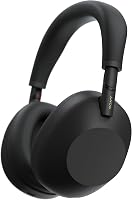



Comments
No comments yet — be the first to share your experience with the Sennheiser HD 650.